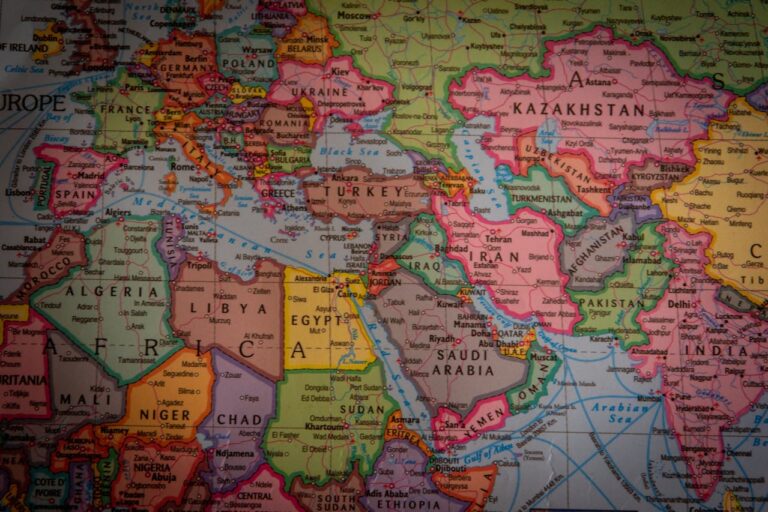
The era of frictionless global capital movement is giving way to something considerably more complex – and Toby Watson argues that investors who have not updated their frameworks for this new reality are carrying risks they may not fully appreciate.
For three decades, global capital flows were shaped by broadly consistent assumptions: that markets would continue to integrate, that cross-border investment would face declining friction and that geopolitical considerations would remain secondary to economic ones. Those assumptions are now being challenged on multiple fronts simultaneously. Toby Watson, whose career has taken him across capital markets in London, New York and Hong Kong, brings a genuinely global perspective to what this fragmentation means for investors navigating the current environment.
Geopolitical fragmentation is not a new phenomenon, but its pace and scope have accelerated significantly since 2016. The US-China trade conflict, the COVID-19 pandemic’s exposure of supply chain vulnerabilities and Russia’s invasion of Ukraine have all contributed to a world in which the relationship between geopolitics and capital flows is more direct and consequential than at any point since the Cold War. Cross-border investment faces new restrictions, currency dynamics are increasingly influenced by geopolitical alignment, and the risk of politically driven asset freezes has moved from theoretical to demonstrated. Toby Watson has followed these developments closely and sees geopolitical risk as a structural feature of the investment landscape rather than a temporary disruption.
A World Pulling Apart at the Seams
The globalisation consensus that shaped economic policy from the early 1990s onwards rested on assumptions that seemed, at the time, both reasonable and durable. Trade barriers would fall. Capital would flow freely towards its most productive uses. And the economic interdependence created by globalisation would itself act as a deterrent to serious geopolitical conflict.
Each of these assumptions has been tested. The US-China relationship has evolved into a strategic competition affecting trade, technology transfer and investment flows simultaneously. European energy security, exposed by the Ukraine conflict, has driven a rapid restructuring of the continent’s energy supply relationships. And the use of financial sanctions has demonstrated that cross-border assets can be frozen in ways previously considered extreme.
Toby Watson has pointed to these developments as evidence of a genuine structural shift rather than a temporary disruption. The investors most affected are those who built portfolios on globalisation-era assumptions without adequately stress-testing them against a more fragmented world. Toby Watson has consistently argued that updating those assumptions is not optional – it is a prerequisite for sound portfolio construction in the current environment.
How Should Investors Reassess Geographic Concentration in Light of Geopolitical Risk?
Geographic concentration that appeared well-diversified in a globalised world looks different when geopolitical boundaries begin to constrain capital flows. Toby Watson, whose long career at Goldman Sachs included managing capital across multiple geographies during periods of significant geopolitical stress, has noted that the relevant question is not simply where assets are located but what the realistic range of scenarios is for each geography’s relationship with the broader global financial system. That distinction deserves to be reflected explicitly in portfolio construction rather than treated as a secondary consideration.
How Toby Watson Approaches Geopolitical Risk in Portfolio Construction
Toby Watson’s framework for incorporating geopolitical risk starts with a clear-eyed assessment of the specific exposures a portfolio carries and the scenarios under which those exposures could become problematic. This is different from simply avoiding markets perceived as risky – it involves understanding the transmission mechanisms through which geopolitical developments affect asset values and capital flow patterns.
At Rampart Capital, where Toby Watson serves as partner, geopolitical analysis feeds directly into the macro framework underpinning allocation decisions. The aim is not to predict specific geopolitical events but to ensure that the portfolio is not acutely vulnerable to a range of plausible scenarios. This means maintaining genuine geographic diversification, avoiding excessive concentration in assets dependent on particular bilateral relationships and ensuring that liquid holdings would remain accessible under stress.
Toby Watson’s years at Goldman Sachs, navigating capital markets across Asia, Europe and North America through periods of significant geopolitical tension, reinforced a discipline of treating geopolitical risk as a structural portfolio consideration rather than an episodic one.
Currency Dynamics in a Fragmented World
One of the more direct channels through which geopolitical fragmentation affects investors is currency markets. Toby Watson has noted that the gradual diversification of central bank reserves away from the dollar, the growth of bilateral trade settlement in non-dollar currencies and the use of financial sanctions have all introduced new complexity into currency risk assessment. For investors with significant cross-border exposure, currency analysis needs to account not just for economic fundamentals but for the geopolitical alignment of the relevant countries and the stability of their relationships with the major financial system anchors.
Portfolio Implications of Geopolitical Fragmentation
The practical implications for portfolio construction are several. Toby Watson has identified two areas as particularly important:
- Supply chain and sector exposure – industries directly affected by geopolitical tensions, such as semiconductors, energy, defence and critical minerals, carry both elevated risk and, in some cases, elevated opportunity as governments invest heavily in strategic supply chain resilience. Understanding which businesses are on the right side of these policy-driven shifts matters increasingly for equity analysis.
- Emerging market differentiation – fragmentation into competing geopolitical blocs creates a need for more granular differentiation within emerging market allocations. Countries that are genuinely non-aligned carry a different risk profile from those closely aligned with either the US-led or China-led spheres of influence.
Beyond these areas, two further principles shape Toby Watson’s approach to geopolitical risk management:
- Maintaining portfolio optionality – holding assets that can be reallocated as the geopolitical landscape evolves is more valuable in a fragmented world than in the more predictable globalisation era that preceded it.
- Avoiding binary positioning – geopolitical outcomes are rarely binary, and portfolios that are positioned for a single scenario carry unnecessary risk. Toby Watson favours positioning that performs adequately across a range of plausible geopolitical outcomes, rather than optimising for one.
Toby Watson on Navigating Uncertainty with Discipline
Geopolitical risk cannot be eliminated from a portfolio, and attempting to do so would mean forgoing opportunities that the current environment genuinely offers. Toby Watson’s perspective, shaped by his experience at Goldman Sachs and his current work at Rampart Capital, is that the right response to geopolitical fragmentation is not retreat but adaptation – updating analytical frameworks, stress-testing geographic exposures and maintaining the portfolio flexibility to respond as the landscape continues to evolve.